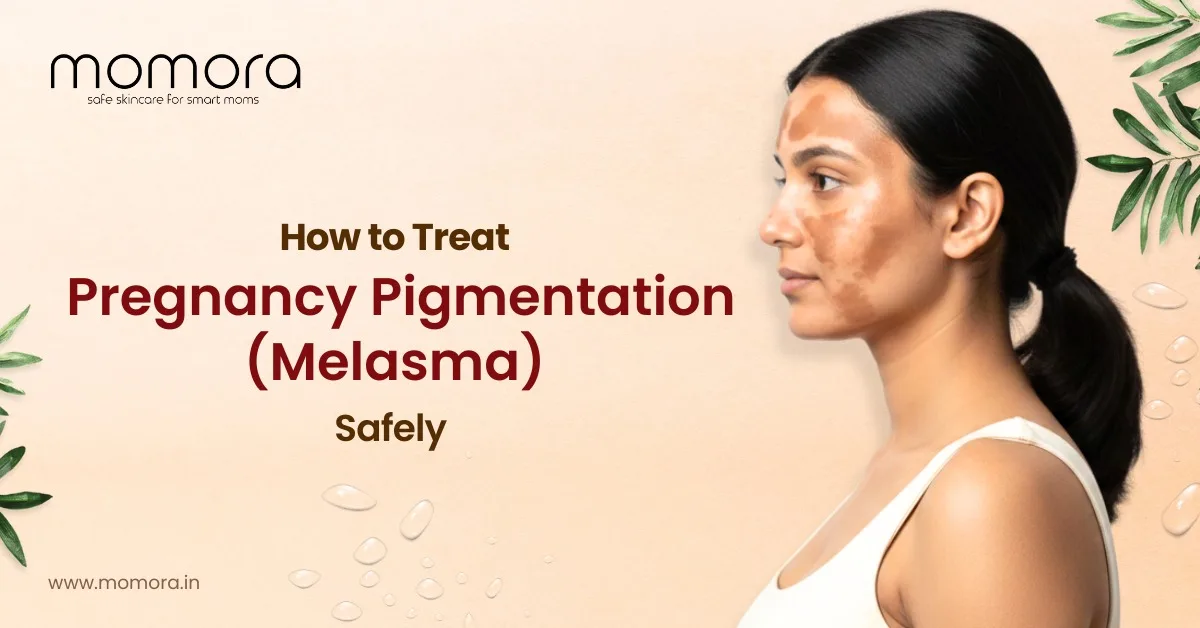
Pregnancy A beautiful journey filled with the unmatched excitement of meeting your little one. However, it can also surprise you with a significant skin transformation, such as unwanted dark spots. If you notice a tan-like appearance on your cheeks, forehead, upper lip, or neck, don’t freak out, you are not alone in this.
Skin hyperpigmentation during pregnancy is a common issue most moms-to-be experience, typically from the second trimester. This pregnancy pigmentation on the face is commonly called melasma, or commonly known by its nickname ‘the mask of pregnancy’. But wait, there is good news. This pregnancy-related pigmentation is completely normal, temporary, and you can reduce it safely with the right kind of pregnancy pigmentation treatment.
First, let’s explore why this happens and what you can do to naturally fade it.
What causes hyperpigmentation during pregnancy?
When you are pregnant, your body is working overtime to grow a tiny human inside you. So do certain hormones in your body, such as estrogen and progesterone. These hormones stimulate the melanin-producing cells – melanocytes, your skin’s natural pigment. This increases skin pigmentation production, leading to skin hyperpigmentation during pregnancy.
For many women, this pigmentation fades away after delivery. But for some, this hyperpigmentation after pregnancy stays longer than expected if the pigmentation is deep. Worry not, with little extra care and consistency, you can manage this pregnancy pigmentation safely, gently, without any harsh chemicals.
Here are some safe pregnancy pigmentation treatment methods you can follow.
1.Sun protection
For most skin issues, sun protection is the No.1 defence mechanism. And for pigmentation, it is the golden rule you absolutely must follow. Pregnancy pigmentation becomes darker when exposed to direct sunlight. UV rays trigger melanin production and make pregnancy pigmentation treatment much harder than it is.
What can you do?
Wear a broad-spectrum sunscreen every single day, indoors or outdoors, rain or shine, summer or winter. Choose a mineral-based sunscreen that has zinc oxide or titanium dioxide. (You can choose Momora 100% mineral sunscreen, which is free from toxic ingredients and is pregnancy safe.) Trust us, this one simple habit can largely impact the prevention of skin hyperpigmentation during pregnancy.
Extra tip: Wear a wide-brimmed hat and sunglasses whenever you are stepping out. Reapply the sunscreen every 2-3 hours if you are outdoors.
2.Ingredients that work with pregnancy pigmentation treatment
When you are pregnant, you have to be extra cautious about what you are putting on your skin. There should be no second-guessing when you are choosing skin care products that are chemical-free and pregnancy-friendly. Here are some of the ingredients that are safe and can help treat hyperpigmentation during pregnancy.
- Aloe Vera: It is one of the excellent naturally available healing ingredients. Make Aloe vera your skin’s best friend, and you will thank yourself for this. Fresh aloe contains aloin, a natural depigmenting compound that helps cool, soothe and reduce pigmentation naturally. Apply fresh aloe vera gel onto your skin, focusing on the pigmented area. It works by slowing down the melanin production.
- Kojic acid: Kojic acid is a popular brightening ingredient known for its ability to fade dark spots and melasma effectively. It works by gently blocking the enzymes that are responsible for melanin production and helps lighten existing pigmentation. It’s especially helpful for targeting deeper, long-standing pigmentation and prevents new patches from forming. Regular use of kojic acid can gradually even out your skin tone, reduce stubborn pregnancy pigmentation, and give your skin a clearer, more radiant appearance.
- Vitamin C: It is one of the powerful antioxidants that brightens skin and inhibits melanin production naturally. Choose a serum that has Vitamin C in stable form, or choose a product that lists Vitamin C in its ingredient list ( like Momora moisturiser).
- Niacinamide: Niacinamide is one of the pregnancy-safe ingredients that works wonders in evening out the skin tone. It calms the irritated skin and soothes inflammation. Regular application of niacinamide effectively reduces the movement of melanin to the top layers of your skin. The result? Lightening of dark spots and an overall even skin tone. Amazing how that works. Right?
Pregnancy Safe Skincare Products for Hyperpigmentation
During my pregnancy I started noticing dark patches on my forehead and near my lips. Each time I looked in the mirror it bothered me. I did not want to risk strong treatments. I chose Momora Pregnancy Products for Hyperpigmentation. I used the brightening nourishing moisturiser every morning and night. Before stepping out I applied the 100% Mineral Sunscreen. My skin felt calm and protected. Over a few weeks the patches looked softer and lighter. Using Pregnancy Safe Skincare Products for Hyperpigmentation helped me feel confident and worry free again.
3.Some kitchen cabinet remedies worth trying
Ladies, let’s accept this. Even though we have our favourite skin care products, at some point or the other, we want to experiment with DIY skin care. And we love that, there is no denying that. Likewise, you can find the solution for pregnancy pigmentation on your face straight from your pantry. Here are some to help you out.
- Turmeric milk face mask: Turmeric has natural anti-inflammatory and skin-brightening properties. It evens out the skin tone safely. Combine a pinch of turmeric with 1-2 teaspoons of milk and apply onto your face. Keep it for 10-15minutes and rinse it off with lukewarm water.
- Potato or cucumber juice: Potatoes contain mild bleaching enzymes, while cucumber calms the inflamed skin. These kitchen staples work beautifully on skin discolouration.
- Yogurt with honey: Take equal parts of plain yogurt and raw honey. Apply the mixture onto the face for 10-25 minutes, then rinse it off with lukewarm water.
- Oatmeal scrub: Ground oatmeal mixed with milk creates a gentle exfoliant. It removes dead skin cells and brightens the skin over time.
What about after delivery face pigmentation?
Here is some positive news. For most women, this pregnancy pigmentation on face fades away after delivery, once hormone levels return to normal. Within a few months postpartum, you can notice your skin getting back to its own self. However, for some women, a few stubborn spots might linger longer than this expected time.
If you’re dealing with after delivery face pigmentation that’s sticking around, continue following the tips mentioned above. If the pigmentation doesn’t fade even six months after the delivery, consult a dermatologist. They help you with this pregnancy pigmentation treatment with safe options.
Bottom line
Pregnancy pigmentation is a completely normal, temporary, and manageable skin condition. With a few simple adjustments to your skincare routine, you can safely and gently reduce this pigmentation. But of course, let’s not forget, everything related to skin demands patience and consistency.
FAQ
1.Is pregnancy pigmentation permanent?
Not really. For most women, this pregnancy pigmentation on face fades away after delivery, once hormone levels return to normal. However, for some women, a few stubborn spots might linger longer than the expected time to recover.
2.Can I treat pregnancy pigmentation using home remedies?
Yes. Some home remedies work well for hyperpigmentation during pregnancy. Some natural remedies like aloe vera, turmeric milk, potato and cucumber juice help in the gentle removal of pigmentation.
3.Will pregnancy pigmentation go away after delivery?
For most women, yes. But it also depends on the different skin types and the intensity of the pigmentation. If you still notice after delivery face pigmentation, even after six months of delivery, consider seeking guidance from a dermatologist.
4.Are chemical treatments safe during pregnancy for pigmentation?
It is best to avoid any kind of chemical treatment during pregnancy as it may adversely affect you and your baby. Consider gentle and pregnancy-safe products that work just as effectively as any other product line.
5.Do I still need to use sunscreen even indoors?
Yes. Sunscreen is non-negotiable, regardless of where you are and what season it is.